
Comprehensive Guide to Habitat & Housing for Rescued Pigeons: Troubleshooting and Problem-Solving
Creating a safe, comfortable, and functional habitat for rescued pigeons is critical to their health, wellbeing, and successful rehabilitation. Unlike basic pigeon care guides, this article focuses on troubleshooting common challenges and practical solutions to optimize pigeon housing environments both indoors and outdoors.
Understanding Pigeon Housing Needs
Pigeons naturally seek environments that mimic their ancestral cliffside roosting and nesting sites—flat ledges, sheltered spots, and safe perches. Rescued pigeons require carefully designed spaces that prevent stress, injury, and disease while encouraging natural behaviors.
Key Habitat Requirements:
- Space: Each pigeon requires adequate space for movement and flight exercise. For aviaries, a minimum of 32 cubic feet per bird is recommended to prevent overcrowding.
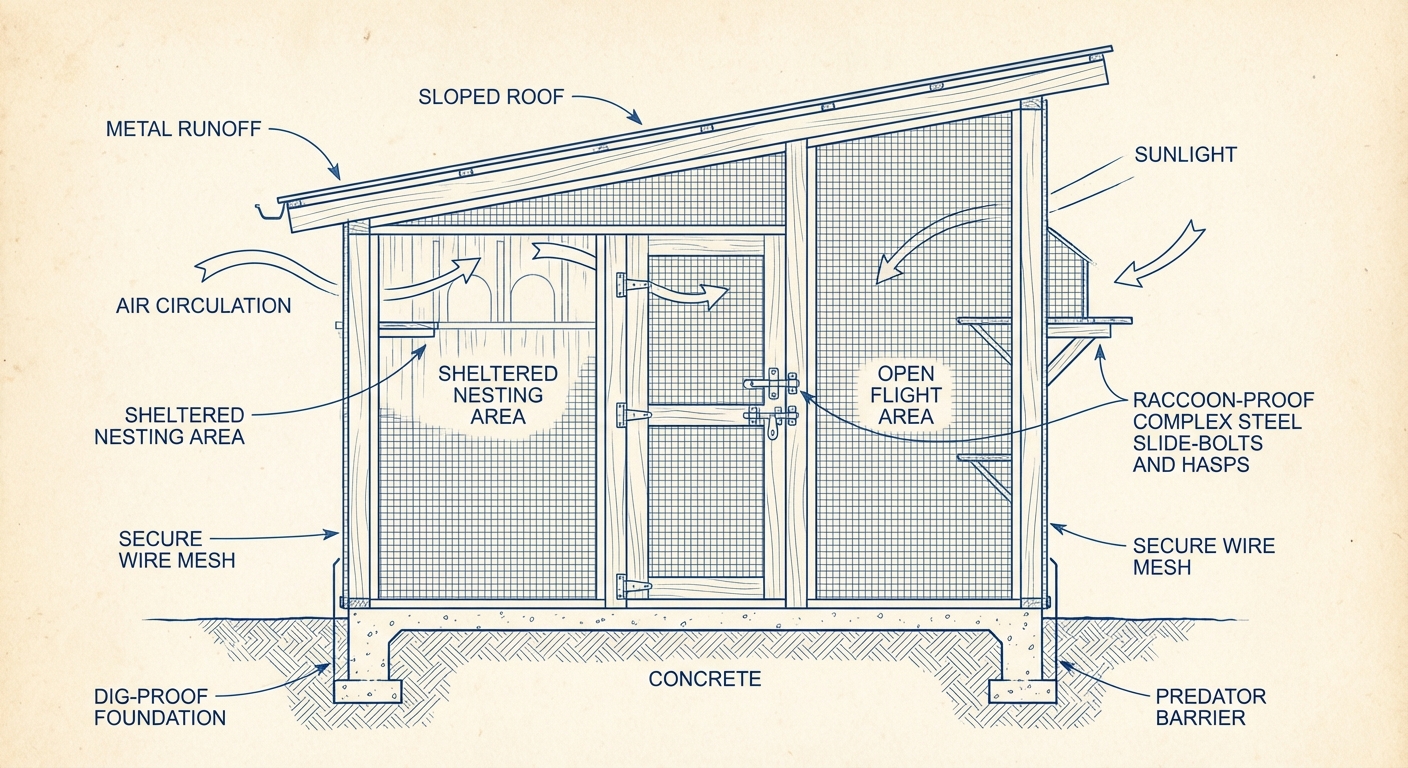
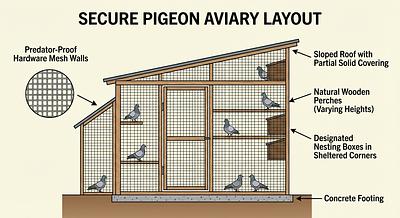
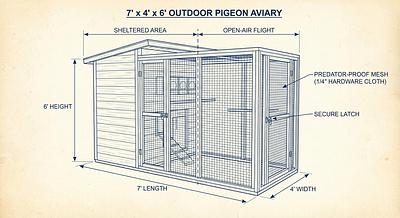
- Safety: Protection from predators such as raccoons, cats, rodents, and hawks is essential. Housing must have secure latches, strong wire mesh with openings no larger than 0.5 inches, and predator-proof design.
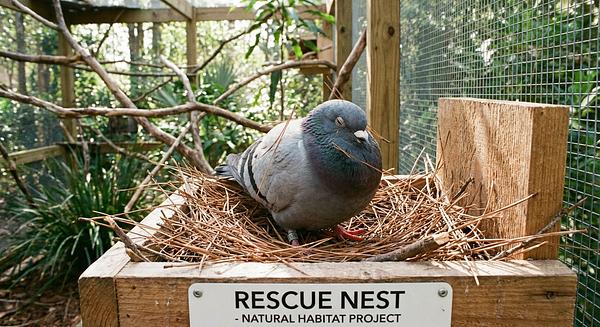
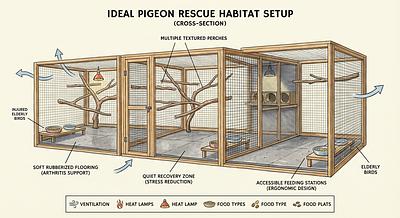
- Roosting and Nesting Areas: Provide flat surfaces for roosting at various heights, nest boxes with appropriate nesting materials like pine needles, and sheltered areas to protect from weather.
- Ventilation and Lighting: Good airflow, natural sunlight, and if indoors, avian-safe full-spectrum lighting help maintain health.
- Cleanliness: Regular cleaning to prevent disease and discourage pests is mandatory.
Troubleshooting Common Housing Problems
Problem 1: Pigeons Roosting or Nesting in Unwanted Areas
Pigeons favor flat surfaces for roosting and nesting, which can lead to conflicts if they choose inappropriate spots.
Solutions:
- Install angled barriers (Birdslides) on flat ledges to prevent landing.
- Use bird wires to deter pigeons from railings and roofs.
- Employ netting to exclude pigeons from large areas.
- Avoid sticky gel repellents (polybutylene) as they harm all birds and other animals.
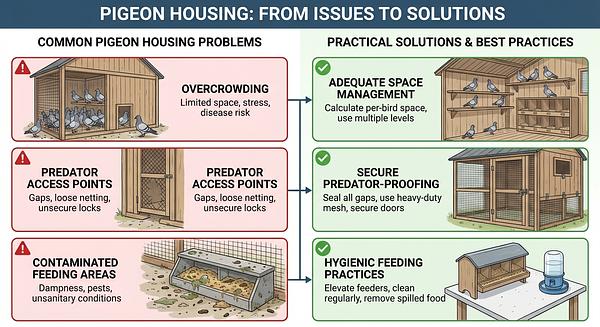
Problem 2: Overcrowding and Stress
Overcrowding in cages or aviaries can cause aggression, health issues, and reduce adoption success.
Solutions:
- Follow guidelines of at least 32 cubic feet per pigeon in aviaries.
- Limit indoor cage sizes to at least 36 inches wide for one or two pigeons to allow movement.
- House pigeons in pairs or groups since they are social animals; avoid solitary confinement in outdoor aviaries.
Problem 3: Predator Intrusion
Outdoor aviaries or cages are vulnerable to raccoons, cats, and birds of prey.
Solutions:
- Use hardware cloth or strong wire mesh with small openings (no larger than 0.5 inches).
- Secure doors and latches with raccoon-proof mechanisms.
- Raise flooring or use solid bases to deter digging predators.
Problem 4: Inadequate Exercise and Enrichment
Pigeons confined without opportunities for flight and social interaction can develop behavioral issues.
Solutions:
- Provide daily supervised out-of-cage time indoors or sufficiently large aviaries outdoors.
- Include mirrors, which pigeons recognize and enjoy, as enrichment.
- Provide bathing dishes and natural substrates for foraging and nesting.
Problem 5: Food and Water Contamination
Poorly designed feeding areas can attract pests and cause health problems.
Solutions:
- Use flat-bottom ceramic dishes for food and water to reduce contamination and facilitate cleaning.
- Clean up spilled food to avoid attracting rodents and insects.
Practical Steps to Build or Improve Pigeon Housing
- Site Selection: Choose a sunny location with good visibility to monitor birds. Ensure half the enclosure is sheltered (roof and siding) and half open for air and light.
- Structural Design: Use peaked or sloped roofs to avoid water pooling and provide roosting space. Avoid chicken wire and bird netting, which pose entanglement risks.
- Materials: Use durable, weather-resistant materials. Hardware cloth or welded wire mesh with small openings is best.
- Security: Install predator-proof locks and consider raised flooring or barriers for ground predators.
- Cleaning Protocols: Design for easy access to clean droppings and replace bedding regularly.
Additional Tips
- Avoid feeding pigeons directly in outdoor spaces where they are not wanted; unintentional feeding encourages large flocks and associated problems.
- Gradually reduce feeding if pigeon populations become too large to encourage natural dispersal without starvation.
- Incorporate nesting boxes sized appropriately for each pair, with natural materials to encourage healthy breeding behaviors.
Summary
Creating and maintaining safe and healthy habitats for rescued pigeons requires attention to space, safety, enrichment, and hygiene. By proactively addressing common challenges—such as unwanted roosting, predator threats, and overcrowding—rescuers can provide environments that promote recovery and well-being. Adhering to recommended standards and humane strategies not only benefits the birds but also supports successful rehabilitation and rehoming efforts.
References:
Humane World for Animals — What to do about pigeons
Palomacy — Shelters' Guide to Pigeon Rescuing & Rehoming
Palomacy — How to Create an Aviary for Rescued Pigeons
Guide to Profitable Livestock — Making Pigeon Habitat FAQ

💬 Comments (0)