
Creating Safe and Comfortable Habitat & Housing for Rescued Pigeons
Rescuing pigeons involves more than just providing food and water; establishing a secure, comfortable, and enriching habitat is essential for their recovery and long-term well-being. This article focuses on the fundamental basics and essential knowledge for creating suitable habitat and housing environments tailored specifically to rescued pigeons.
Understanding Pigeon Housing Needs
Pigeons require environments that cater to their natural behaviors, social needs, and physical health. Both indoor and outdoor housing have unique considerations:
Indoor Housing
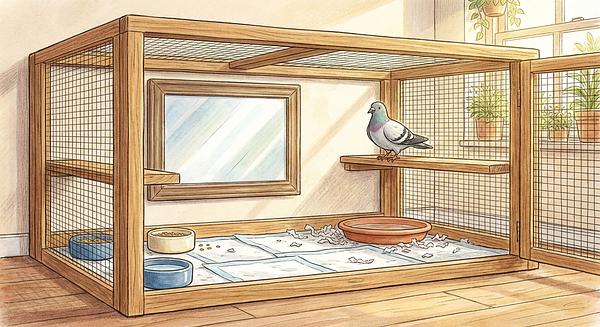
- Space: Pigeons are horizontal space users rather than vertical climbers, so cages should be wide and roomy. A minimum cage size of approximately 42
wide x 27
deep x 30" high is recommended to allow comfortable movement and flight attempts indoors. - Flooring: Avoid wire flooring as it can injure their feet and cause bumblefoot. Use flat, solid surfaces covered with easily cleanable materials such as plastic bottoms, puppy pads, or paper towels.
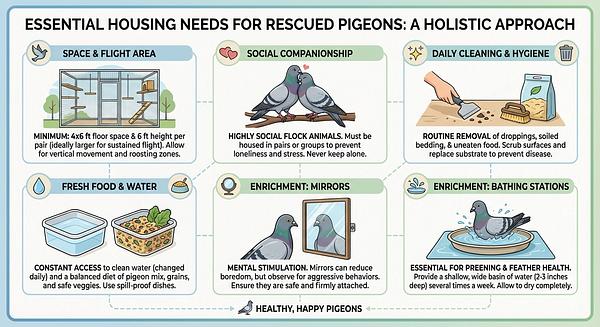
- Enrichment: Include a large mirror; pigeons recognize themselves and enjoy their reflection, which provides mental stimulation.
- Exercise: Daily supervised out-of-cage time inside the home is important for physical health and social interaction.
- Lighting: Provide access to natural sunlight unfiltered by glass or avian-safe full-spectrum lighting to support vitamin D synthesis and overall health.
- Bathing: Supply a large, flat-bottomed dish or casserole pan for bathing, which is vital for feather maintenance and comfort.
Outdoor Housing (Aviaries)
Outdoor aviaries must be carefully designed to ensure safety, comfort, and sufficient space:
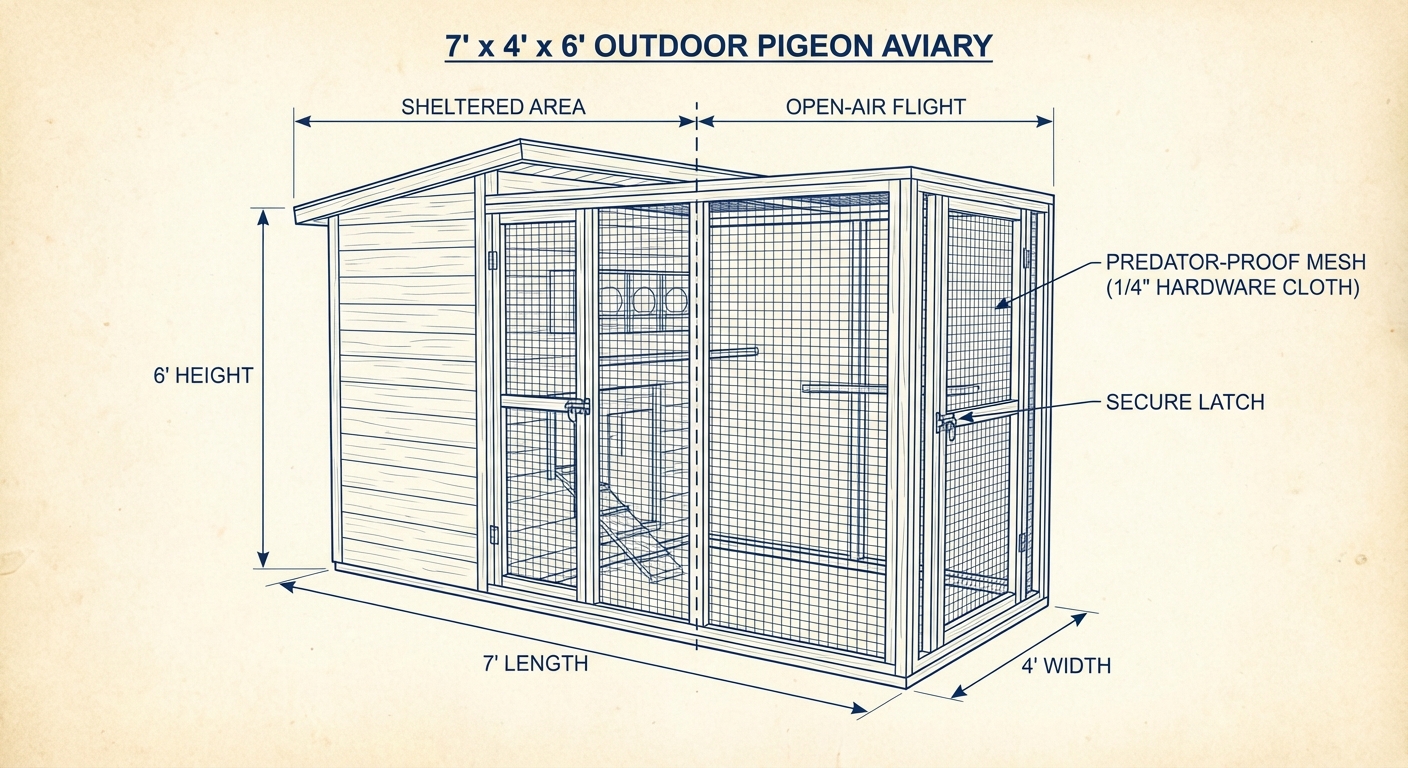
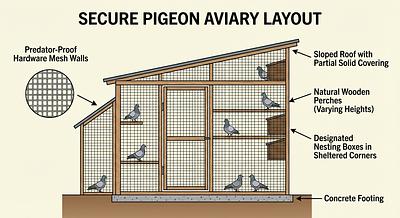
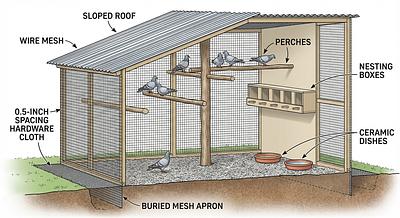
- Predator and Rodent Proofing: Use sturdy, durable materials with mesh openings no larger than 0.5 inches. Doors and latches must be raccoon-proof and secure against other predators. Avoid chicken wire or bird netting, as these are hazardous.
- Size Recommendations: Minimum aviary dimensions should be about 7' long x 4' wide x 6' high for 2-4 pigeons, with approximately 8-10 square feet per bird recommended for comfort and flight space. Larger aviaries are always better.
- Shelter and Weather Protection: Incorporate a sheltered area covering at least half the aviary to protect from rain, wind, and sun. Provide deep shade areas for heat protection, and ensure nest boxes remain dry.
- Flooring: Line the aviary floor with hardware mesh (0.5" openings or less) covered by wood, cement, tile, or vinyl to prevent rodent access and protect feet. Avoid bare wire floors.
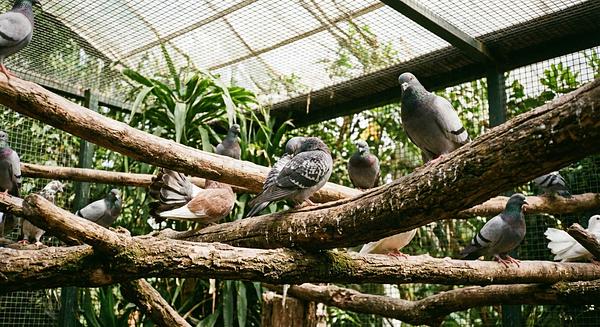
- Perches and Roosts: Include natural branches of 1-2" diameter as perches at various heights. Pigeons enjoy perching near mesh walls to observe surroundings.
- Social Housing: Pigeons are social birds and should never be housed alone outdoors. Aviaries should house at least a pair to meet social needs.
- Location: Choose a sunny spot with some shade, good visibility for caregivers, and consideration of neighbors due to cooing sounds.
Key Habitat Elements to Support Health and Well-being
- Companionship: Pigeons thrive with companionship, either from humans or other pigeons. Isolation causes stress and behavioral issues.
- Cleanliness: Daily cleaning of cages or aviaries prevents disease and parasite buildup. Remove droppings and replace soiled bedding or floor coverings promptly.
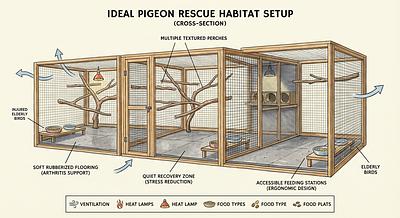
- Feeding and Watering Stations: Use flat-bottom ceramic dishes for food and water to reduce contamination and ease cleaning. Fresh food and water must be supplied daily.
- Nesting Provisions: For breeding or comfort, provide nest boxes (one per pair) and nesting materials such as pine needles.
Practical Steps to Build or Adapt Housing
- Assess Your Space: Measure available indoor or outdoor space and plan for the minimum recommended dimensions.
- Select Materials Wisely: Use sturdy, non-toxic materials with secure mesh and hardware. Avoid materials known to cause entanglement or injury.
- Plan for Cleaning and Maintenance: Design housing for easy access and cleaning, with removable trays or doors.
- Create Enrichment Opportunities: Add mirrors, perches, bathing dishes, and safe toys to keep pigeons mentally and physically active.
- Ensure Safety: Double-check all predator-proofing measures, including locks, mesh spacing, and structural integrity.
By focusing on these fundamental basics—adequate space, safety, social needs, and environmental enrichment—rescuers and caregivers can create habitats that support the recovery and happiness of rescued pigeons. Proper housing is the foundation for health, longevity, and quality of life in pigeon rescue efforts.
💬 Comments (0)