
Creating Safe Habitats and Housing for Rescued Pigeons: Challenges and Solutions
Rescuing pigeons requires more than just providing food and medical care; creating a safe, comfortable, and stimulating habitat is critical for their recovery and long-term wellbeing. This article focuses on the key challenges in pigeon habitat and housing and practical solutions to overcome them, helping rescuers and caregivers provide the best environment for these birds.
Understanding the Needs of Rescued Pigeons
Pigeons are ground feeders and social birds that require space to move, fly, perch, forage, and socialize. Their natural behavior and health depend heavily on the quality and safety of their habitat. Rescued pigeons, often vulnerable or recovering, benefit greatly from an environment that mimics their natural conditions while protecting them from stressors.
Common Challenges in Pigeon Habitat & Housing
1. Predator and Rodent Protection
Pigeons are vulnerable to predators like raccoons, cats, hawks, and rats. Housing must be secure to prevent attacks and intrusion.
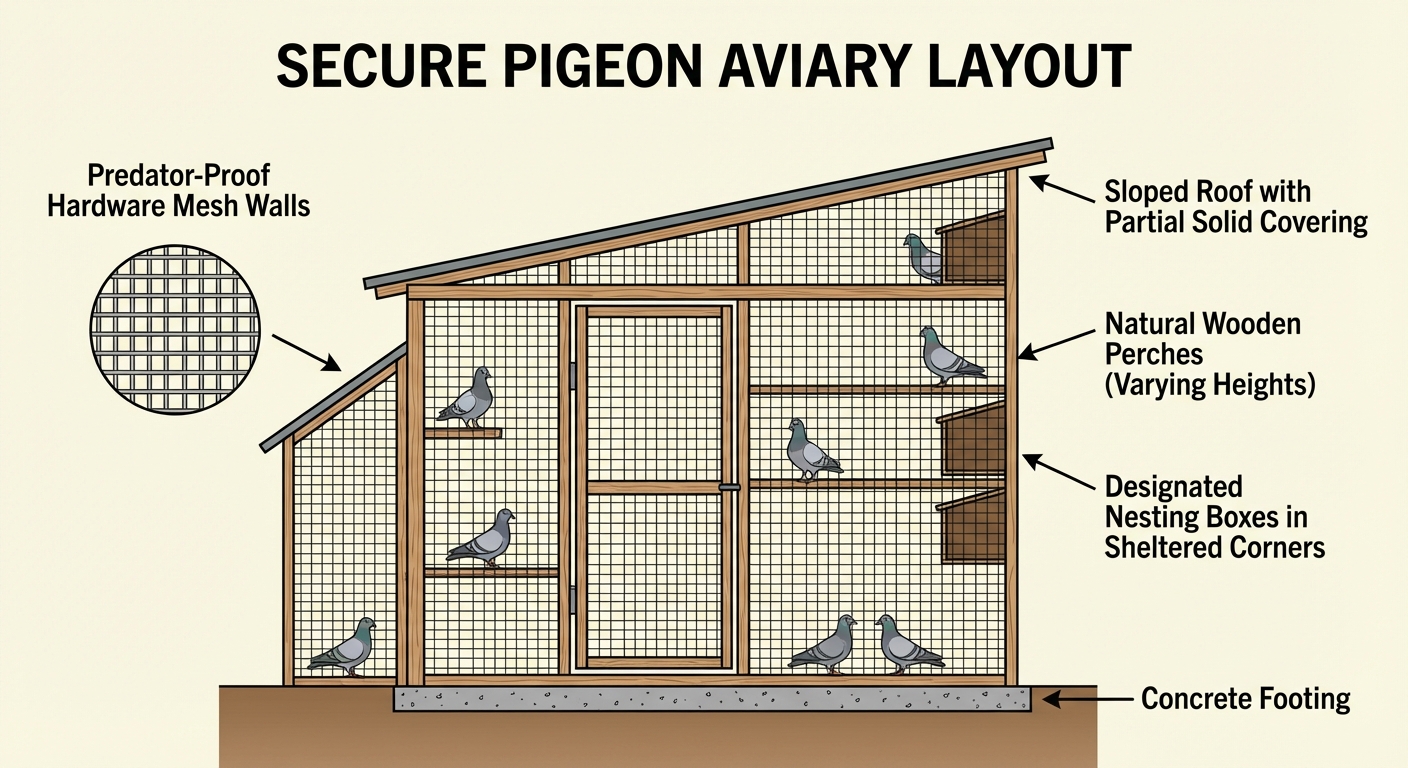
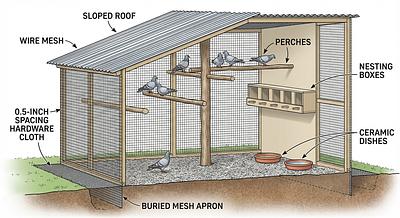
- Solution: Use sturdy hardware mesh (16-gauge or better) with mesh openings no larger than 0.5 inches. Extend mesh underground at least 1 meter to prevent burrowing predators. Ensure all doors and latches are raccoon-proof and consistently checked for weak points.
2. Adequate Space and Flight Room
A cramped enclosure leads to stress, injury, and poor health.
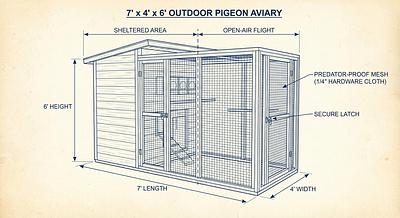
- Solution: Provide at least 8-10 square feet per pigeon in an aviary at least 6 feet tall to allow comfortable flight and movement. For small groups (up to 10 pigeons), an aviary size of around 8' x 8' x 6' is recommended. For fewer birds, smaller aviaries of 7' x 4' x 6' can be adequate, but single pigeons should be housed indoors or with companions to prevent loneliness.
3. Shelter from Weather and Elements
Pigeons need protection from rain, wind, extreme heat, and cold.
- Solution: Half of the aviary should be roofed and sided to provide deep shade and shelter from driving rain. Sheltered corners with natural nesting boxes or hides offer retreat and privacy. Use sloped or peaked roofs to prevent pooling water and allow some mesh roofing for natural light and ventilation.
4. Flooring and Hygiene
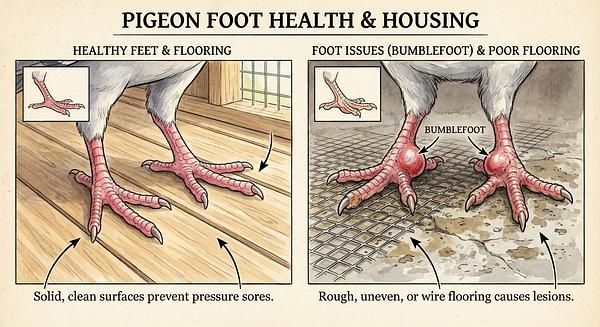
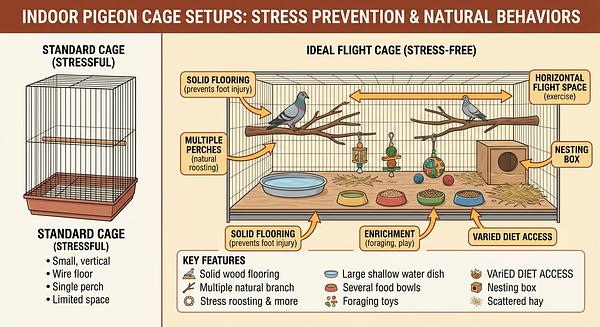
Standing on wire mesh floors can injure pigeons’ feet, leading to bumblefoot and infections. Additionally, hygiene is essential to prevent disease.
- Solution: Cover hardware mesh floors with wood, cement, pavers, or tile to provide solid footing. If using concrete or wood, ensure smooth surfaces with slight slopes for drainage. Clean the aviary daily by scraping droppings and replacing bedding materials like newspaper or puppy pads indoors.
5. Environmental Enrichment
Without stimulation, pigeons can become bored, stressed, or develop abnormal behaviors.
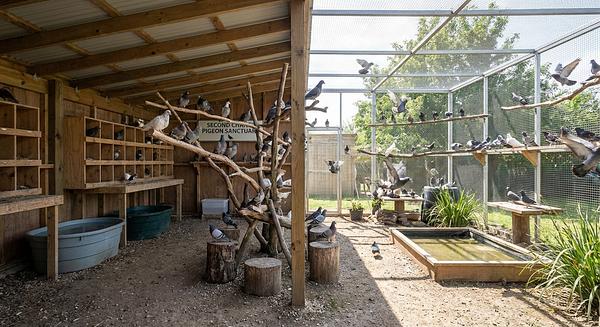
- Solution: Include natural wood perches of varying diameters (1-2 inches) for foot health and comfort. Provide multiple perches at different heights near mesh walls for views and social interaction. Add shelves, shallow water tubs for drinking and bathing, and nesting boxes or baskets. Mirrors can also engage pigeons socially but monitor for aggressive behavior.
6. Social Housing Considerations
Pigeons are social but can sometimes exhibit aggression.
- Solution: House compatible species or pigeons together, especially young birds, to encourage natural behaviors and socialization. Avoid overcrowding and provide enough space and resources to reduce competition.
7. Monitoring and Accessibility
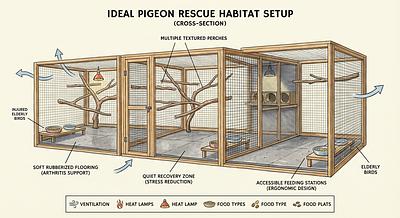
Rescued pigeons, especially the injured or sick, require close observation and safe handling.
- Solution: Initially house these birds in smaller, accessible enclosures for frequent monitoring. Gradually transition them to larger aviaries with supervised access to develop fitness and natural behaviors before eventual release or permanent housing.
Practical Steps to Build and Maintain a Pigeon Aviary
Location: Choose a sunny, visible spot that balances bird needs and neighbor considerations. Bright light is important as pigeons have poor low-light vision.
Materials: Use black welded wire or galvanized hardware mesh for durability. Avoid chicken wire or bird netting as these can trap birds.
Design: Build a rectangular or square aviary with a sloped roof. Include half the area under solid shelter and half open mesh for air and light. Doors should be secure and easy for caregivers to access.
Furnishing: Add multiple natural wood perches, shelves, water tubs for drinking and bathing, and nesting boxes. Provide hiding spots and places to retreat from weather or stress.
Cleaning: Implement a daily cleaning routine, removing droppings and soiled bedding. Ensure good drainage and avoid standing water to prevent disease.
Safety Checks: Regularly inspect the aviary for holes, loose mesh, or gaps. Check door latches and structural integrity especially after storms or high winds.
Additional Considerations
Indoor Housing: For single rescued pigeons or when outdoor aviaries are not feasible, provide large cages with solid flooring and horizontal space rather than vertical. Keep clean with daily maintenance and provide enrichment similar to outdoor settings.
Legal and Zoning Compliance: Before building, check local regulations regarding bird keeping to ensure compliance with permits and restrictions.
Acclimation: Gradually expose pigeons to natural weather conditions as they recover to build resilience while always providing access to shelter.
Creating safe and enriched habitats for rescued pigeons addresses many challenges, from predator protection to social needs. By following careful design, maintenance, and enrichment guidelines, caregivers can improve recovery outcomes and quality of life for these birds.
💬 Comments (0)