
Creating Safe and Supportive Habitats for Rescued Pigeons: Advanced Techniques and Best Practices
Rescuing pigeons is a compassionate endeavor that requires more than just providing food and water; it demands creating a habitat that ensures their physical health, psychological well-being, and safety. This guide focuses on advanced techniques and best practices for housing rescued pigeons, emphasizing environment design, materials, and daily care to foster thriving pigeon populations under human care.
Understanding Pigeon Needs in Captivity
Pigeons are highly social, intelligent birds that require space to fly, perch, nest, and socialize safely. Their natural behaviors and health depend heavily on their living environment. Safe housing must address:
- Space: Adequate volume per bird to prevent stress and overcrowding.
- Safety: Protection from predators and pests.
- Comfort: Proper shelter from weather extremes.
- Stimulation: Opportunities for social interaction and mental engagement.
Advanced Habitat Design Principles
1. Size and Space Optimization
- Space per bird: Experts recommend a minimum of 32 cubic feet per pigeon in aviaries to reduce crowding and stress, approximately quadruple the space often provided by breeders.
- Floor area: For outdoor aviaries, a minimum of 8-10 square feet per pigeon is ideal to allow natural movement and flight.
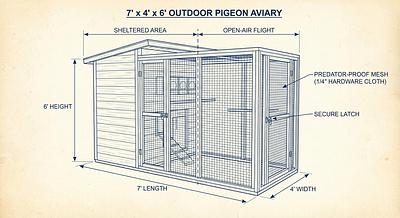
- Height: Aviaries should be at least 6 feet tall to enable flight and natural perching behaviors.
2. Structural Materials and Construction
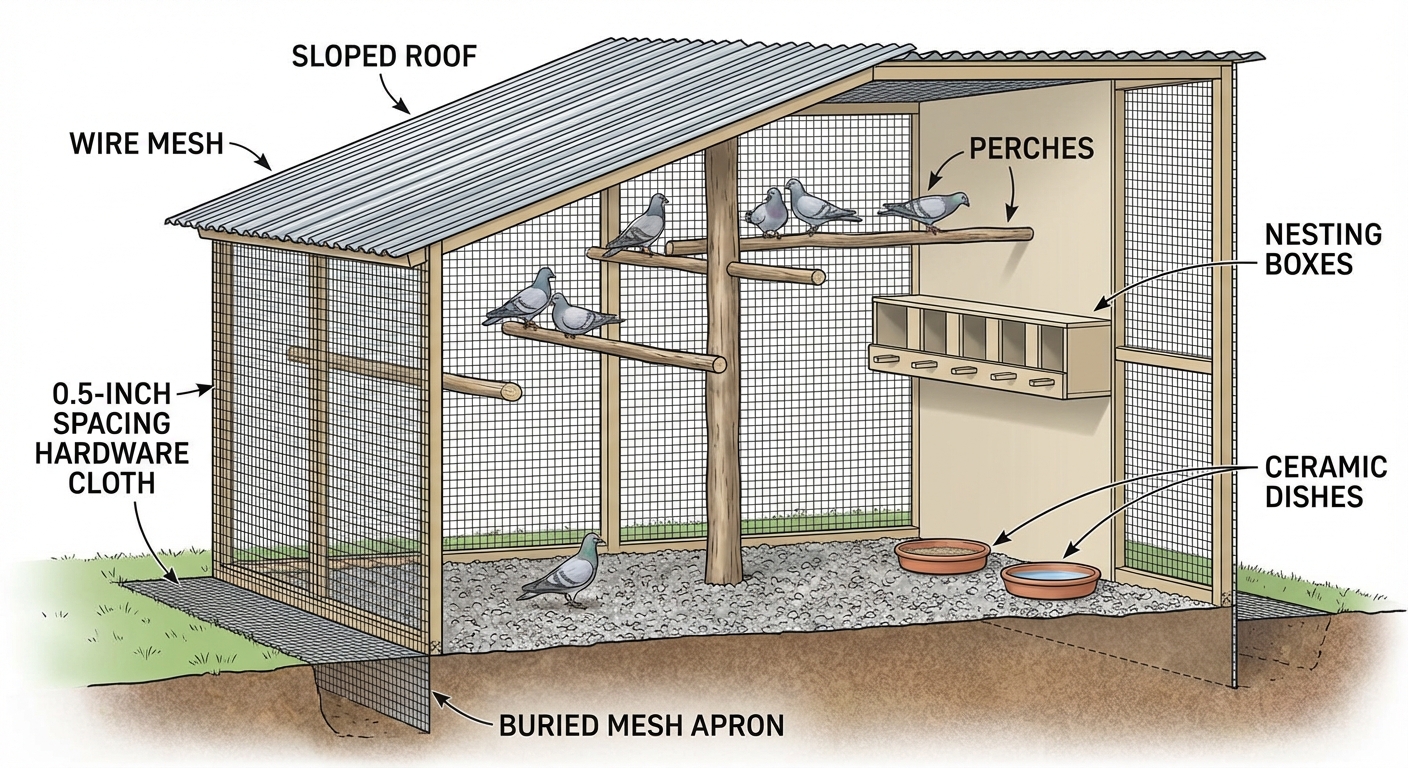
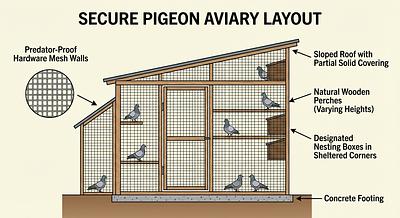
- Predator and rodent-proofing: Use heavy-gauge hardware cloth with 0.5-inch or smaller mesh openings. Avoid chicken wire or bird netting, which pose entanglement hazards.
- Frame and walls: Weather-resistant wood or metal frames combined with wire mesh walls provide durability and ventilation.
- Flooring: Options include removable droppings trays for hygiene, cement pavers (where climate allows), pine shavings or chips for comfort, or dirt floors with good drainage.
- Roofing: Half of the aviary should be covered with a sloped, waterproof roof to provide shelter from rain, sun, and wind.
3. Ventilation and Climate Control
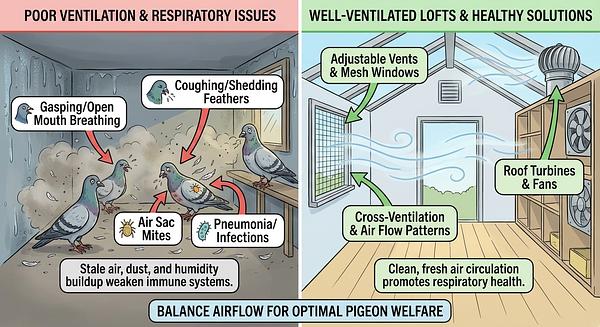
- Ensure continuous airflow without drafts to reduce respiratory issues common in pigeons.
- Incorporate adjustable vents or windows with mesh screens to regulate temperature and humidity.
- In colder climates, provide insulated sections or heated shelters for winter protection.
4. Perches, Nesting, and Enrichment
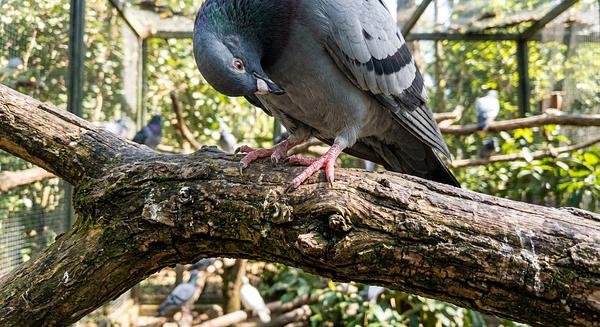
- Use natural wood branches or durable materials for perches placed at varying heights to encourage natural roosting behavior.
- Provide at least 10-12 inches of perch space per bird to prevent crowding.
- Include nesting boxes (about 12x12x12 inches) at a ratio of one box per 3-4 breeding pairs.
- Supply nesting materials such as pine needles to allow natural nest building.
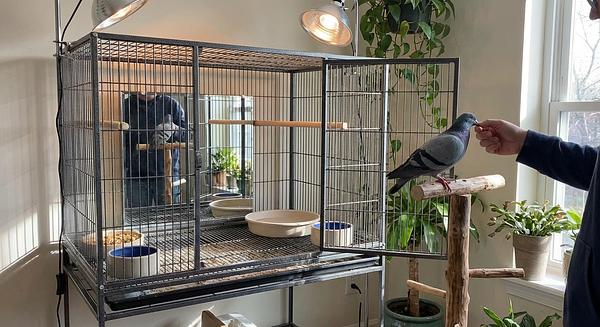
- Add large mirrors inside to offer social stimulation, as pigeons enjoy self-recognition and interaction with reflections.
- Provide multiple flat-bottom ceramic dishes for food and water to ensure easy access and reduce contamination.
5. Hygiene and Maintenance Features
- Design aviaries with removable droppings trays or flooring materials that facilitate easy cleaning and reduce disease risk.
- Use materials that resist chewing, pecking, and weather damage to maintain structural integrity over time.
- Implement secure doors and raccoon-proof latches to prevent predator intrusion.
Indoor Housing for Unreleasable or Companion Pigeons
For pigeons that cannot be released or are kept as pets:
- Provide a large cage (minimum 36 inches wide) with room for exercise and perching.
- Allow daily supervised out-of-cage time in a safe indoor environment.
- Ensure access to sunlight or avian-safe full-spectrum lighting for vitamin D synthesis.
Practical Steps to Build and Furnish a Safe Pigeon Aviary
- Site selection: Choose a location with good sun exposure, natural wind protection, and visible to caregivers for easy monitoring.
- Materials gathering: Select durable, weather-resistant wood, galvanized metal, and hardware cloth.
- Construction: Build a frame with wire mesh walls; install a sloped roof covering at least half the aviary.
- Install perches and nest boxes: Position at varying heights; secure nest boxes away from drafts.
- Set up feeding and watering stations: Use flat-bottom ceramic dishes placed to minimize contamination.
- Add enrichment: Mirrors, bathing pans, and natural branches enhance well-being.
- Safety checks: Verify all latches are predator-proof; mesh openings are small enough to exclude pests.
- Routine maintenance: Clean droppings trays regularly; check for damage or signs of pests and illness.
Innovative Trends and Technology
- Automated feeders and watering systems can reduce labor and ensure consistent nutrition.
- Solar-powered ventilation and lighting improve environmental control sustainably.
- Vertical loft designs maximize space in urban or limited environments.
Summary
Providing rescued pigeons with a safe, spacious, and stimulating environment is essential for their recovery and long-term welfare. Advanced housing techniques that emphasize predator-proofing, ventilation, proper space allocation, and enrichment not only improve pigeon health but also encourage natural behaviors critical for their psychological well-being. Caregivers and rescuers should prioritize durable materials, thoughtful design, and routine maintenance to create habitats where rescued pigeons can thrive.
💬 Comments (0)