
Pigeon Rescue: Troubleshooting and Problem-Solving in Rescue & Rehabilitation
Rescuing and rehabilitating pigeons requires a careful balance of immediate intervention, ongoing care, and troubleshooting common challenges to ensure the best chance of recovery and eventual release. This article provides detailed guidance for rescuers and caregivers, focusing on practical problem-solving during the rescue and rehabilitation processes.
Initial Rescue: Stabilization and Containment
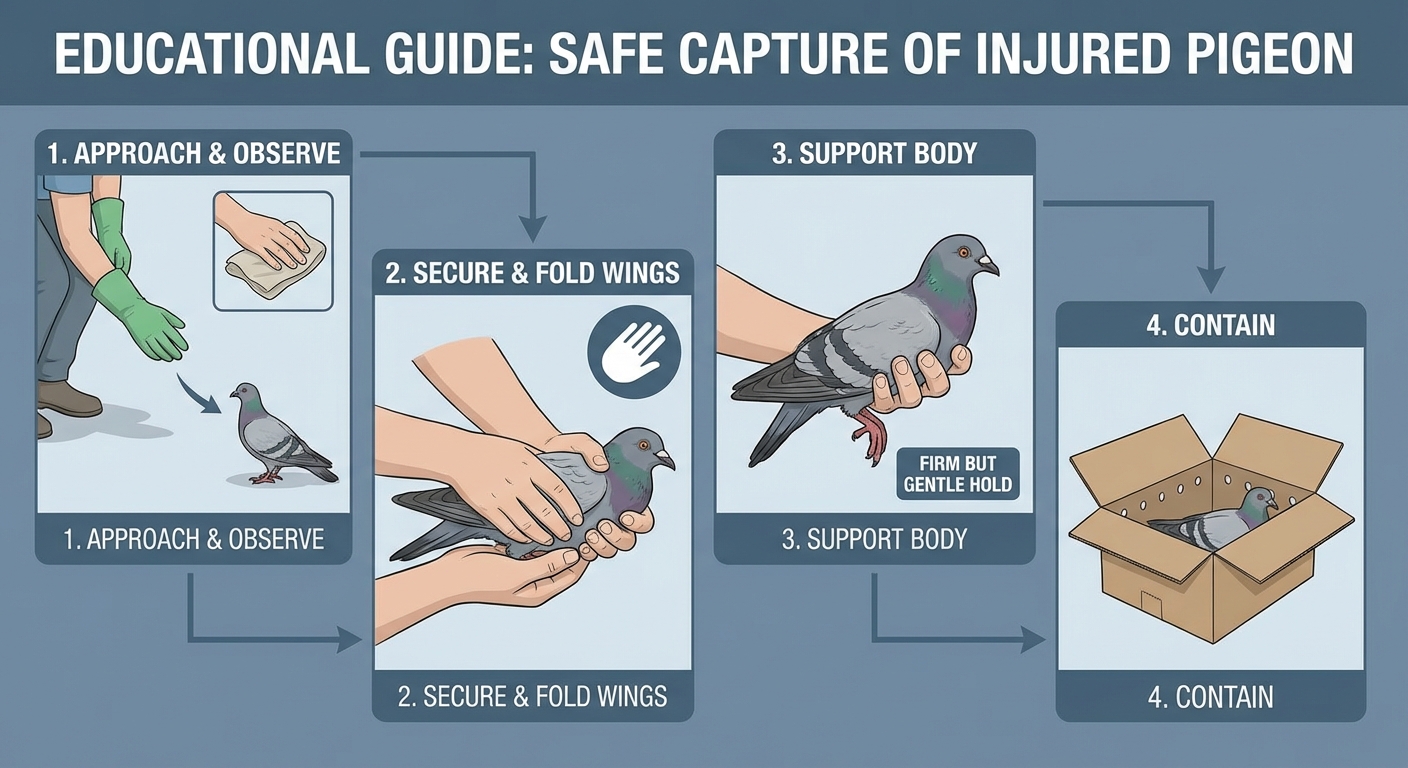
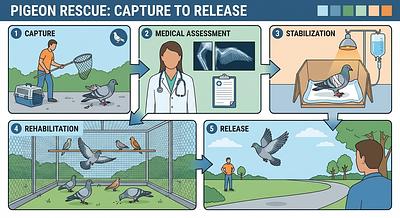
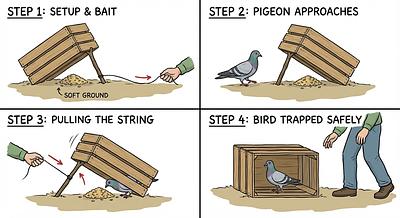
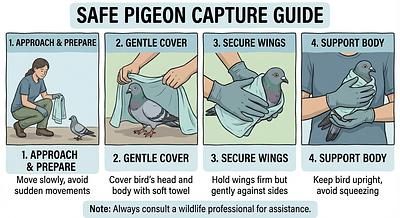
Approaching and Capturing the Pigeon
- Approach cautiously and quietly: Move slowly from behind to avoid startling the bird.
- Use appropriate restraint: For pigeons, use one hand to support the body and feet, while the other hand secures the wings folded against the body to prevent injury.
- Contain safely: Place the pigeon gently into a ventilated box lined with soft cloth or paper towels to reduce stress and prevent escape.
Troubleshooting Common Capture Issues
- If the pigeon is mobile but injured: Try to herd it into a corner or use a towel for gentle capture.
- If the pigeon can fly a little: Attempt capture during low light conditions or use a bird net.
- Avoid chasing the bird excessively, as this can increase stress and worsen injuries.
Immediate Post-Rescue Care: Heat, Isolation, Hydration
Heat
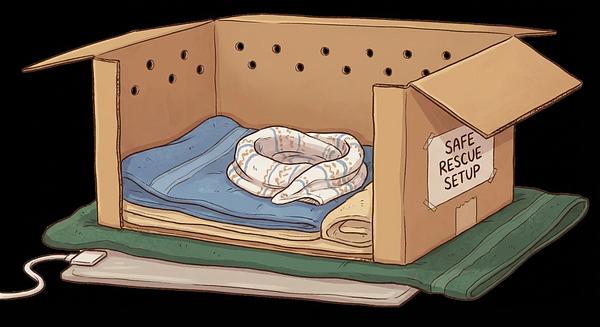
- Warm the pigeon gradually: Use a towel-lined heating pad on low, a warm water bottle wrapped in cloth, or a low wattage lamp directed into the cage.
- Avoid overheating: Keep the temperature comfortable; approximately 85°F (29°C) is suitable.
- Do not apply heat if head trauma is suspected to avoid worsening swelling.
Isolation
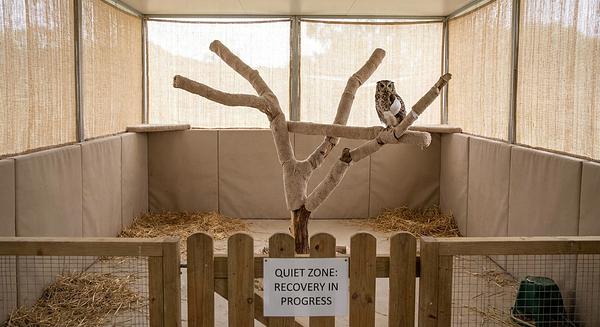
- Provide a calm, dark, and quiet environment to minimize stress.
- Use a small, secure enclosure to restrict movement but allow easy access for observation and care.
Hydration
- Do not give fluids to a cold or unresponsive pigeon. Only after warming and assessment should hydration begin.
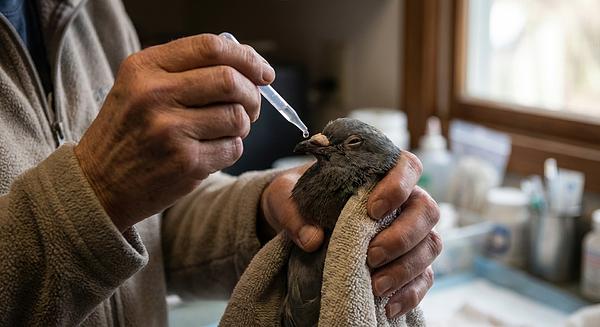
- Use warm or room temperature fluids, preferably a rehydration solution (e.g., warm water mixed with a pinch of salt and sugar or unflavored Pedialyte).
- Administer fluids carefully using an eyedropper at the beak’s edge, avoiding nostrils.
- Monitor hydration status: Elastic skin, bright eyes, moist mouth membranes, and normal droppings indicate good hydration.
Troubleshooting Stabilization Problems
- Pigeon remains lethargic after warming: Reassess for severe injury or illness; seek veterinary help.
- Difficulty hydrating: The bird may reject fluids or aspirate; slow administration and veterinary consultation are needed.
- Overheating signs: Panting, wing spreading, or lethargy — reduce heat source immediately.
Medical Assessment and Injury Management
Common Injuries and Issues
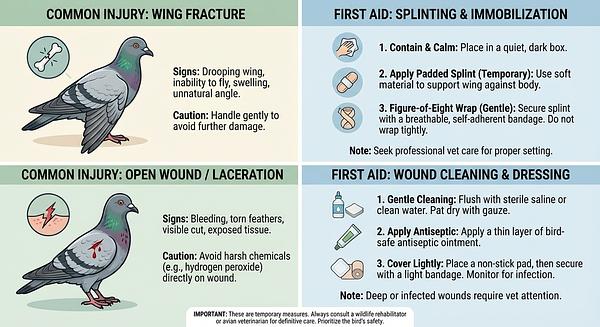
- Fractures: Limb or wing injuries may require immobilization.
- Wing droop or paralysis: May indicate nerve damage.
- Open wounds or bleeding: Require gentle cleaning and bandaging.
- Respiratory distress: Watch for labored breathing or nasal discharge.
Troubleshooting Medical Problems
- Suspected fractures: Immobilize the affected limb with a splint; seek avian veterinary care promptly.
- Bleeding that does not stop: Apply gentle pressure; if severe, immediate vet care is critical.
- Signs of infection: Swelling, pus, or foul odor require antibiotics prescribed by a vet.
Rehabilitation: Nutrition, Exercise, and Behavioral Support
Nutrition
- Provide species-appropriate diet: Seeds, grains, legumes, and fresh water.
- Supplement with vitamins and minerals if advised by a vet.
- Monitor feeding behavior: Encourage eating; hand-feed if necessary.
Exercise and Wing Conditioning
- Gradually increase space for movement as the pigeon heals.
- Encourage flight practice in a safe, enclosed space once medically cleared.
Behavioral Troubleshooting
- Pigeon refuses food or water: Try different foods, hand feeding, or consult a vet.
- Stress behaviors (feather plucking, aggression): Maintain a quiet environment, minimize handling, and provide enrichment.
Preparing for Release
- Ensure full recovery: Normal flight, alertness, and feeding behavior.
- Acclimate to outdoor conditions: Gradually expose the bird to natural light and weather.
- Choose a safe release location: Away from heavy traffic, predators, and with access to food and water.
Summary of Key Troubleshooting Tips
| Problem | Possible Cause | Solution |
|---|---|---|
| Pigeon too cold, lethargic | Shock, exposure | Gradual warming, isolation, avoid feeding until warmed |
| Difficulty hydrating | Dehydration, refusal | Use rehydration solution, slow administration |
| Persistent bleeding | Severe injury | Apply pressure, seek professional care |
| Refusal to eat | Stress, illness | Hand feeding, dietary adjustments, vet consult |
| Wing injury | Fracture, nerve damage | Immobilize, veterinary care |
Rescuers and caregivers can significantly improve outcomes for injured or ill pigeons by applying these troubleshooting strategies during rescue and rehabilitation. Close observation, patience, and timely veterinary consultation are critical to resolving issues effectively and safely returning pigeons to the wild or a healthy environment.
References:
1. Jaagruti.org - Basic life-saving steps for injured/ill pigeons
2. Ontario Nature - Tips for helping an injured bird
3. Best Friends Animal Society - How to help an injured wild bird
4. Bird Alliance of Oregon - Wildlife rescue tips
💬 Comments (0)