
Pigeon Rescue: First Aid & Emergency Care
When encountering an injured or sick pigeon, immediate and appropriate first aid can significantly improve its chances of survival and recovery. This article provides fundamental basics and essential knowledge for rescuers and caregivers to effectively stabilize pigeons in distress before professional help is available.
Recognizing When to Intervene
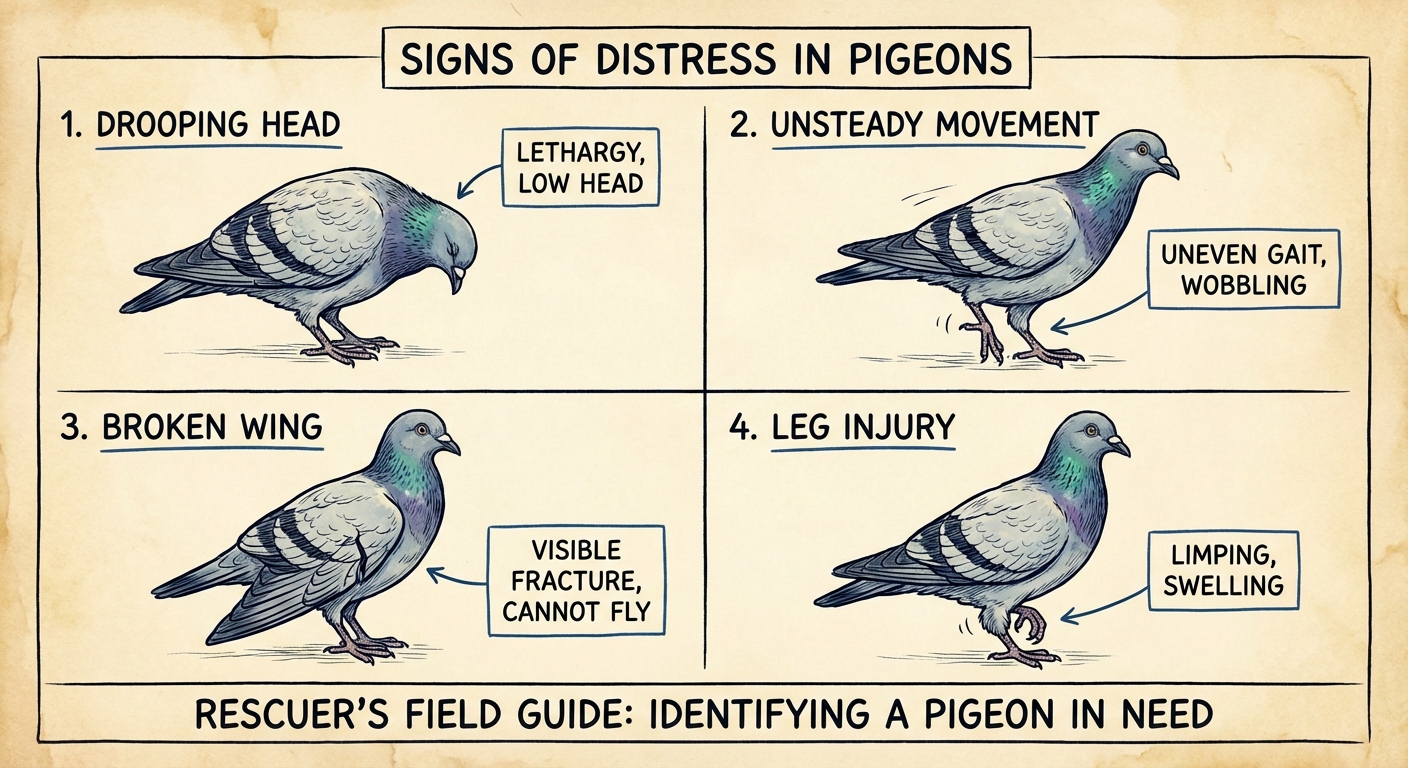
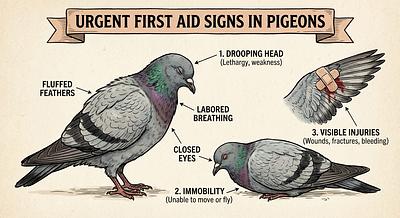
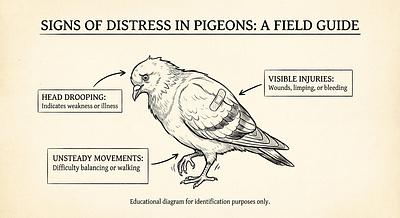
- Signs of severe distress: A pigeon with a drooping or upside-down head, unsteady movement, or immobility on the ground is likely in critical condition and requires urgent care. These symptoms can indicate serious issues such as head trauma, infection, poisoning, or severe dehydration.
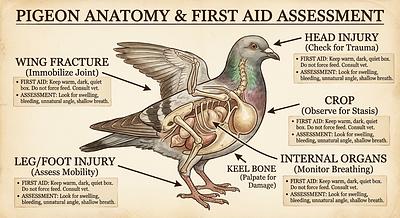
- Visible injuries: Broken wings or legs cause extreme pain and stress; these birds should be secured safely and offered medical attention as soon as possible.
- Baby pigeons: Nestlings or fledglings outside the nest and unable to fly should be returned to their nest if possible. If the nest cannot be found or parents are absent for extended periods, rescuers should intervene to prevent starvation or exposure.
Primary Goals: Heat, Isolation, and Hydration
Following three critical steps immediately after rescue can stabilize an injured or sick pigeon:
1. Heat
- Why: Pigeons, especially young or sick ones, can rapidly become hypothermic.
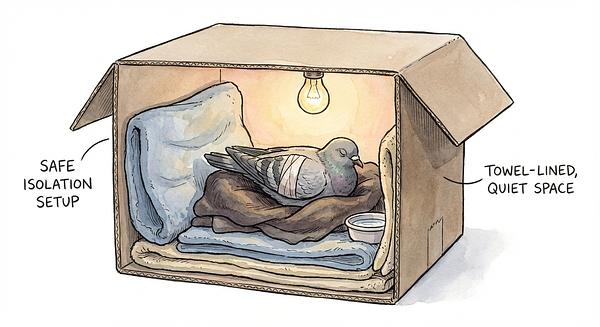
- How: Wrap the bird gently in a soft towel and provide a gentle heat source such as a towel-wrapped hot water bottle, a low-wattage lamp, or a heating pad set on low. An emergency option is a microwaved rice-filled sock (ensure it is warm, not hot).
- Caution: If head trauma is suspected, avoid direct heat to prevent exacerbating swelling.
- Duration: Keep the bird warm for at least 20-30 minutes until it becomes responsive and alert enough to swallow fluids safely.
2. Isolation
- Provide a quiet, dark, warm space where the pigeon can rest away from noise, bright light, and other animals. This helps reduce stress and allows the bird to conserve energy.
3. Hydration
- When: Only after the pigeon is warm and alert.
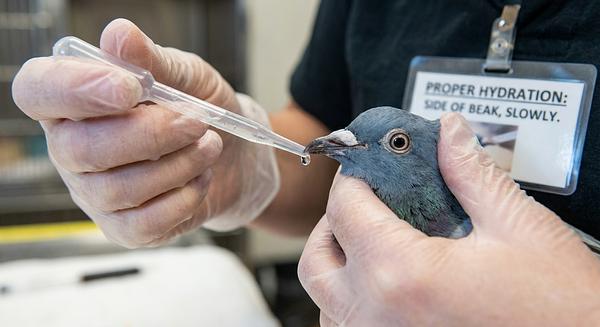
- How: Offer fluids slowly using an eyedropper or syringe at the side of the beak every few minutes, avoiding the nostrils.
- What: Use a rehydration solution made by mixing a pinch of salt and sugar into a cup of warm water or offer unflavored Pedialyte as an emergency substitute.
- Avoid: Do not give plain water initially if other fluids are available, and never force fluids into an unresponsive or cold bird.
Handling and Safety Tips
- Approach the pigeon calmly and gently to avoid causing further stress or injury.
- Use a towel to safely and securely wrap the bird, minimizing movement and preventing escape or injury to both the bird and rescuer.
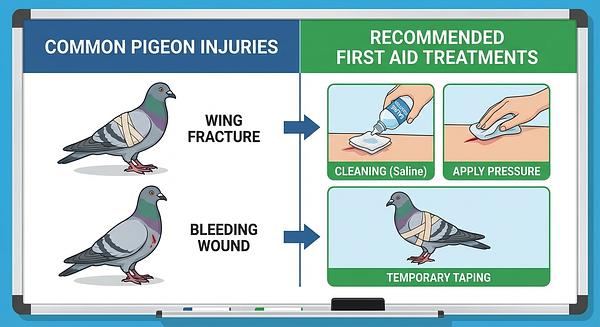
- For birds with visible wounds, cleanse gently with warm saline (1 teaspoon salt to 1 cup water). Avoid antiseptic creams as they can contaminate feathers and cause self-mutilation.
- Control bleeding by applying gentle pressure with clean gauze or tissue; if bleeding is severe, seek immediate veterinary care.
- Temporarily immobilize broken wings by taping the wing tips together carefully, avoiding restricting breathing or circulation.
Observations and Documentation
- Take clear photos of the pigeon, focusing on injuries and any abnormal droppings or fluids. This can assist veterinarians or experienced rehabilitators in diagnosis and treatment.
- Note the location, time found, and conditions of rescue to provide contextual information to professionals.
When to Seek Professional Help
- If the pigeon is unresponsive, severely injured, bleeding heavily, or has suspected poisoning or head trauma, contact a local avian vet or wildlife rehabilitator immediately.
- Keep a list of emergency contacts for wildlife rescue centers and avian veterinarians handy for quick reference.
Additional Practical Advice
- Never attempt to feed a cold or unresponsive pigeon; feeding should only happen after warming and hydration.
- Avoid overcrowding rescued birds; isolate each to prevent disease transmission and stress.
- Provide rest and minimize handling after initial first aid to encourage recovery.
Summary
Effective first aid for injured or sick pigeons hinges on quick recognition of distress signs, securing warmth, isolation, and careful rehydration. Gentle handling, cleaning wounds properly, and timely referral to professionals maximize survival chances. By mastering these fundamental steps, rescuers can provide critical support during the crucial early moments of care.
💬 Comments (0)