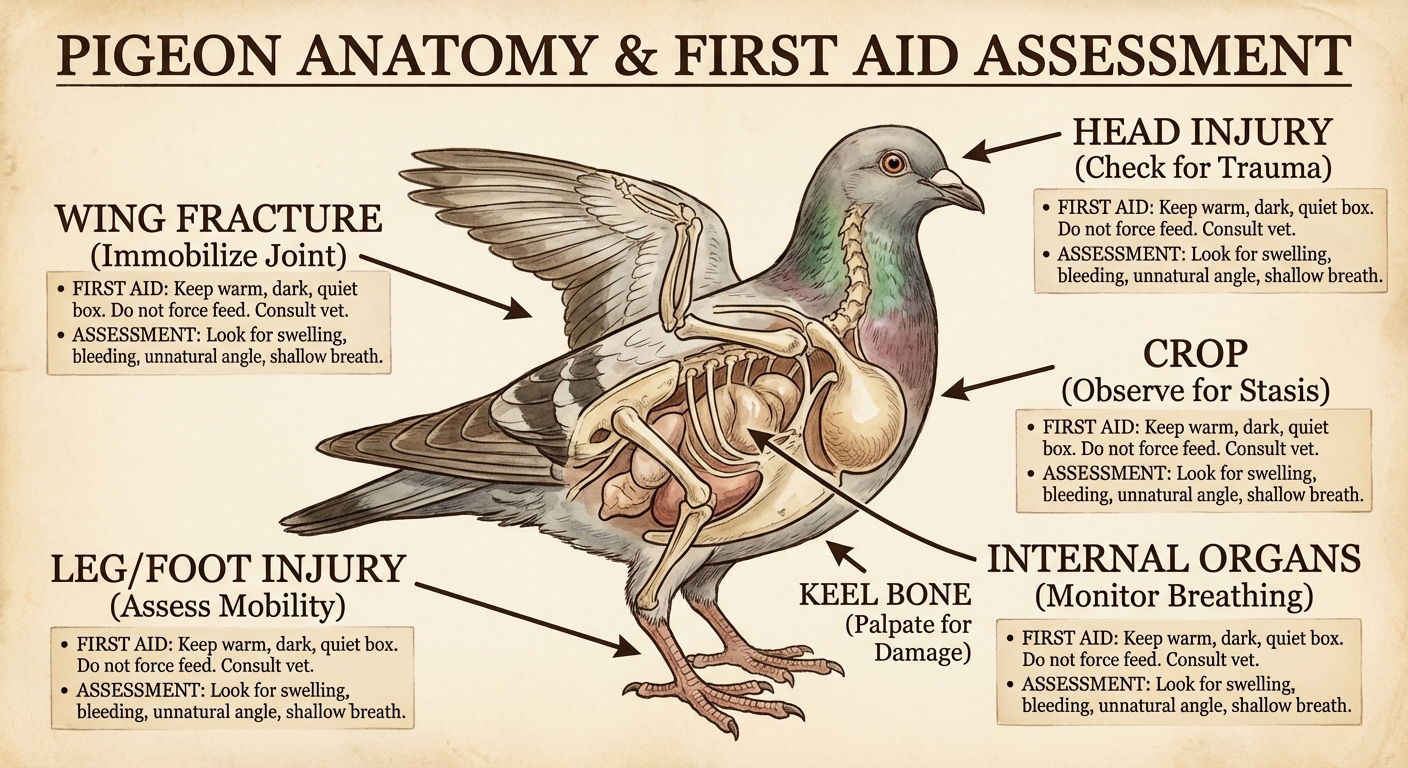

Advanced First Aid & Emergency Care for Injured or Sick Pigeons
Rescuing and providing emergency care for pigeons requires skill, patience, and knowledge of advanced first aid techniques tailored specifically to these birds. This guide presents detailed, practical steps and best practices for rescuers and caregivers to stabilize pigeons effectively before professional veterinary care.
Securing and Handling the Pigeon Safely
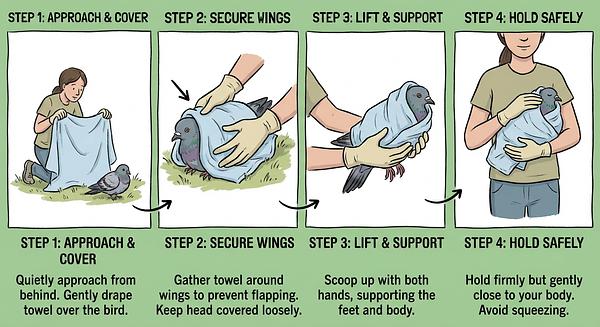
- Initial Capture: Approach the pigeon calmly to avoid causing stress or injury. If the bird is wild and likely to flail or escape, gently toss a soft towel or blanket over it to restrain its wings before pickup.
- Proper Grip: Hold the bird with one hand across the back and wings to prevent flapping, supporting the body firmly but gently with both hands. Avoid holding by the legs or wings alone.
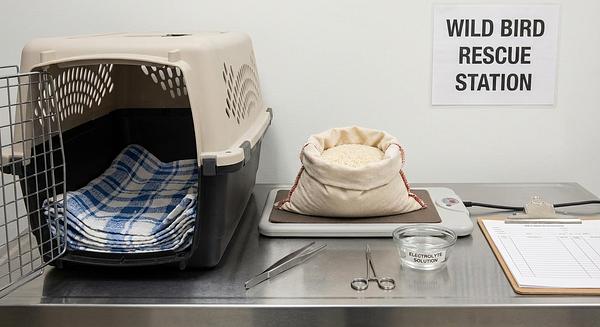
- Transport: Place the pigeon in a ventilated, secure enclosure such as a small pet carrier or a box lined with soft cloth or paper towels. Keep the environment dim and quiet to reduce stress.
Immediate Assessment and Stabilization
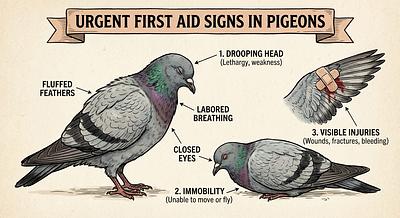
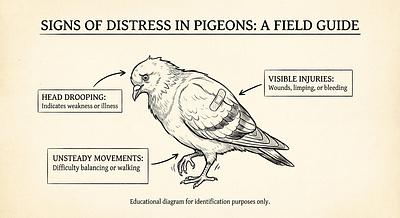
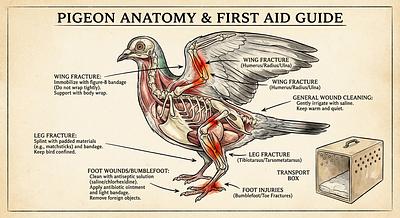
- Visual Check: Examine for obvious injuries like bleeding, broken wings or legs, drooping wings, or wounds. Look for signs of serious illness such as head tilt, unsteady movements, gasping, or seizures which require urgent veterinary attention.
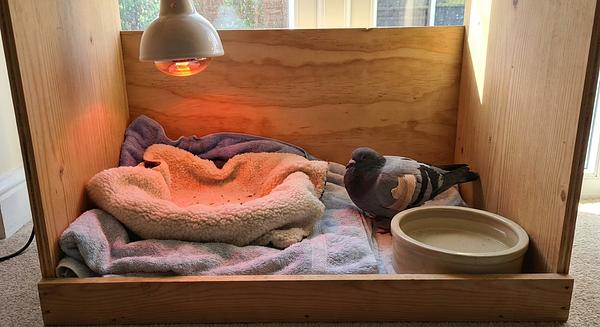
- Warming the Bird: Sick or injured pigeons often have difficulty maintaining body temperature. Provide gentle warmth using an electric heat pad, a microwaveable rice sock, or a hot water bottle wrapped in a towel. Ensure heat sources are warm but not hot to avoid burns.
- Isolation: Place the bird in a quiet, dark space to calm it and prevent further stress or injury.
Advanced First Aid Techniques
Wound Care and Bleeding Control
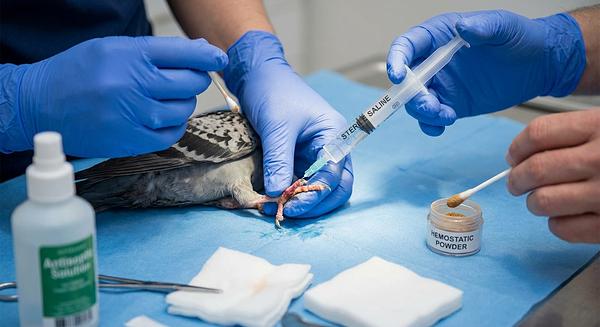
- Cleaning: Flush wounds thoroughly with warm, sterile water or saline solution to reduce infection risk. Use antibacterial wet wipes sparingly and sterile tools laid on clean surfaces to avoid contamination.
- Hemostasis: Apply clotting agents such as quick stop powder or hemostatic cream designed for avian use. Use a sterile cotton swab or q-tip to apply gently on bleeding areas.
- Removing Entanglements: If the pigeon’s legs or wings are entangled with string or similar materials, carefully unwind using needle-nose tweezers or cuticle scissors. Cut parallel to the skin to avoid injury.
Rehydration and Nutrition Support
- Hydration: Dehydration is a critical concern. Offer a rehydration solution made by dissolving a pinch of salt and sugar in warm water. Administer slowly using an eyedropper or syringe without a needle, placing drops along the side of the beak to stimulate swallowing. Avoid water if the bird is unable to hold its head upright to prevent aspiration.
- Feeding: Once stabilized and alert, provide easily digestible food such as soaked grains or specialized pigeon feed. Avoid forcing food if the bird is weak; professional advice is recommended.
Managing Shock and Trauma
- Minimize Handling: Limit handling to essential tasks to reduce stress and prevent shock.
- Heat and Quiet: Maintain warmth and a calm environment to support recovery.
- Observation: Monitor breathing, responsiveness, and mobility closely. Note any signs of worsening condition that require immediate veterinary care.
Setting Up a Safe Recovery Environment
- Enclosure: Use a clean, well-ventilated cage or box with soft bedding.
- Temperature: Keep ambient temperature stable around 30–32°C (86–90°F) for injured or young pigeons.
- Sanitation: Change bedding regularly and disinfect the enclosure to prevent secondary infections.
When to Seek Professional Help
- Signs requiring immediate veterinary intervention include severe bleeding, inability to stand, gasping, seizures, head trauma, or suspected poisoning.
- Contact avian veterinarians or wildlife rehabilitators experienced with pigeons for advanced diagnostics and care.
Summary of Essential First Aid Kit for Pigeon Rescuers
- Soft towels or blankets
- Needle-nose and wide tweezers
- Cuticle scissors
- Antibacterial wet wipes
- Sterile saline or warm water for flushing wounds
- Hemostatic powders or creams
- Eyedropper or syringe (no needle)
- Microwaveable rice sock or heat pad
- Feed suitable for pigeons (grains, seeds)
- Gloves and hand sanitizer
By mastering these advanced first aid and emergency care techniques, rescuers can significantly improve the chances of survival and recovery for injured or sick pigeons. Prompt and proper intervention, combined with professional veterinary care, forms the cornerstone of effective pigeon rescue.
💬 Comments (0)