
Pigeon Rescue: First Aid & Emergency Care
When encountering an injured or sick pigeon, immediate and informed first aid can significantly improve the bird’s chance of survival. This guide focuses on practical emergency care steps and addresses common challenges rescuers face, providing detailed, actionable advice for rescuers and caregivers.
Recognizing When to Intervene
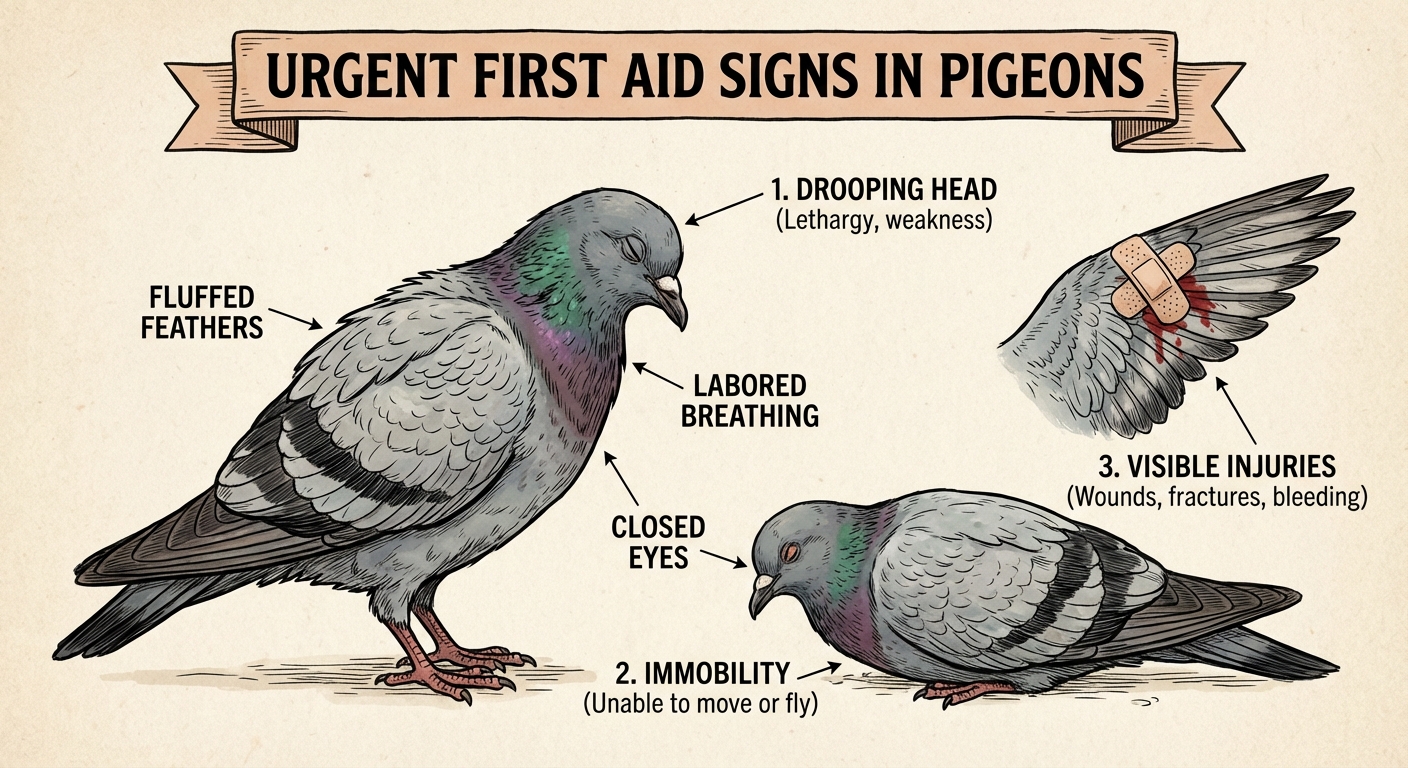
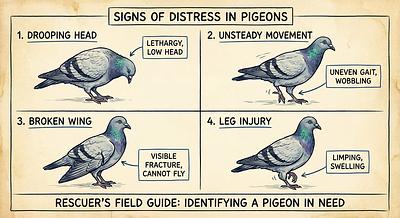
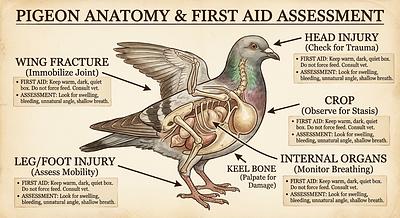
- Critical signs include a pigeon with a drooping or upside-down head, unsteady movements, or immobility on the ground. Such signs often indicate severe distress from possible head trauma, disease (e.g., Paramyxovirus - PMV), poisoning, or severe injury and require urgent care or veterinary attention.
- Visibly broken wings or legs cause extreme pain and stress; these pigeons need immediate isolation and medical intervention.
- Young pigeons (squabs) found outside the nest and unable to fly will not survive without intervention if parents are absent.
Common Challenges in First Aid & How to Overcome Them
1. Safely Handling a Frightened or Injured Pigeon
- Birds may panic, causing further injury or making handling difficult.
- Solution: Use a soft towel or cloth to gently wrap the pigeon, restraining wings and feet to prevent flapping and pecking injuries to both bird and handler.
- Protect yourself by covering the pigeon’s head to reduce stress and prevent pecking.
2. Preventing Hypothermia
- Injured or sick pigeons often suffer from hypothermia, which can be fatal if untreated.
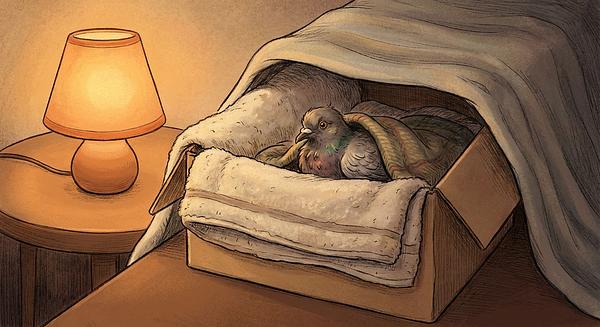
- Solution: Warm the pigeon gradually using a towel-wrapped hot water bottle, heating pad on low with towel barrier, or a low-wattage lamp. Avoid overheating or direct heat contact.
- Note: If head trauma is suspected, avoid applying heat directly as it may worsen swelling.
3. Hydration Without Causing Aspiration
- Dehydrated pigeons need fluids, but administering liquid improperly can cause aspiration pneumonia.
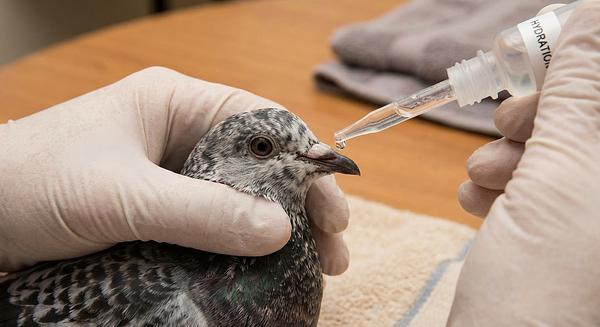
- Solution: Only rehydrate after the bird is warm and alert. Use a warm (not hot) rehydration solution (water mixed with a pinch of salt and sugar) administered slowly with an eyedropper at the edge of the beak every few minutes. Avoid forcing fluid into the nostrils or throat.
4. Managing Wounds and Bleeding
- Small cuts and wounds can become infected or cause excessive bleeding.
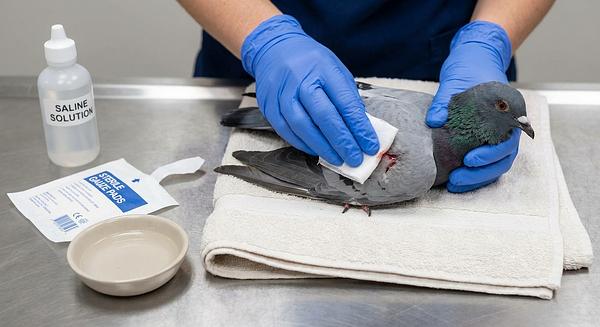
- Solution: Clean wounds gently with warm saline (1 tsp salt to 1 cup water). Avoid antiseptic creams that can contaminate feathers and cause self-mutilation.
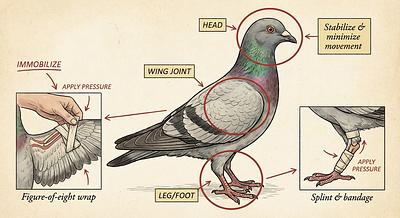
- To control bleeding, use gentle pressure with sterile gauze. For severe bleeding, seek immediate veterinary care. Temporary immobilization of wings or limbs can reduce further injury.
5. Isolating and Minimizing Stress
- Stress exacerbates the bird’s condition, delaying recovery.
- Solution: Place the pigeon in a quiet, dark, warm box or cage lined with soft towels. Covering the enclosure reduces visual stimuli and stress.
Step-by-Step Emergency Care Protocol
- Assess the situation safely without causing further harm to the pigeon or yourself.
- Secure the pigeon gently with a towel, restraining wings and feet.
- Provide warmth gradually; avoid direct heat sources.
- Isolate the pigeon in a quiet, dark, warm space.
- Check for dehydration and administer rehydration solution carefully if alert.
- Clean any wounds with saline solution; avoid ointments.
- Control bleeding with gentle pressure; immobilize injured limbs or wings if possible.
- Observe for signs of shock or severe trauma (lethargy, unresponsiveness).
- Contact an avian veterinarian or wildlife rehabilitation center promptly for further care.
Additional Practical Tips
- Avoid feeding cold or hard-to-digest foods immediately; nutrition should be addressed only once the bird is stable and hydrated.
- Keep a ready first aid kit including saline solution, soft towels, eyedroppers, micropore tape or Vetwrap, and a heat source.
- Document the bird’s condition with photos and notes to assist veterinarians or rescue groups.
- Know local wildlife rehabilitation contacts and veterinary services specialized in avian care in advance.
Why This Matters
Pigeons are hardy yet vulnerable to urban hazards and disease. Prompt, knowledgeable first aid stabilizes their condition and improves survival odds. Many challenges—handling stress, preventing hypothermia, careful hydration, and wound management—can be overcome by following clear, compassionate steps, ensuring these birds have a second chance to recover and thrive.
By understanding and implementing these detailed emergency care approaches, rescuers can confidently provide life-saving support to injured or sick pigeons, bridging the critical gap until professional veterinary care is available.
💬 Comments (0)