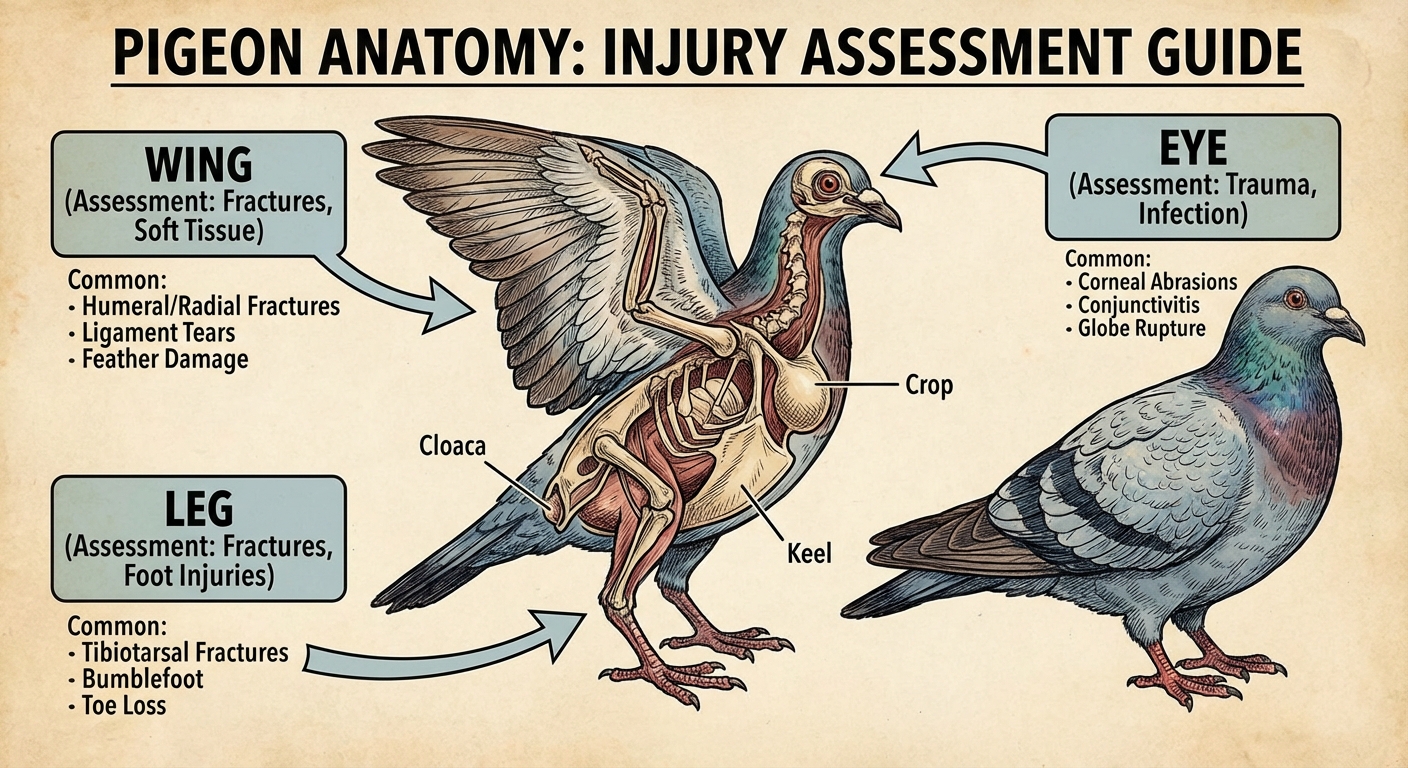

Comprehensive Guide to Pigeon Rescue: Step-by-Step Rescue & Rehabilitation
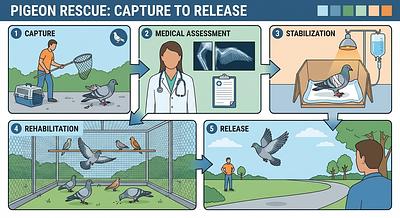
Rescuing and rehabilitating pigeons requires a detailed, compassionate approach tailored to their unique biology and behavior. This guide provides a systematic tutorial on safely rescuing injured or distressed pigeons and supporting their recovery through rehabilitation. It emphasizes proper handling, secure housing, health assessment, and ongoing care — vital for rescuers and caregivers aiming to improve outcomes for these resilient birds.
Step 1: Assessing the Situation and Safety First
- Evaluate the bird’s condition: Determine if the pigeon is injured, ill, or simply trapped. Look for visible wounds, inability to fly, or abnormal behavior.
- Ensure human safety: Approach slowly and calmly to avoid stress or injury to yourself.
- Protect the pigeon: Avoid unnecessary handling; keep the environment quiet and calm.
Step 2: Safely Capturing the Pigeon
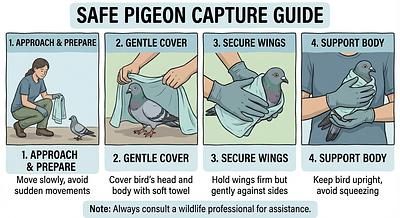
- Prepare your equipment: Have a towel or light blanket, a secure box with air holes, and gloves ready.
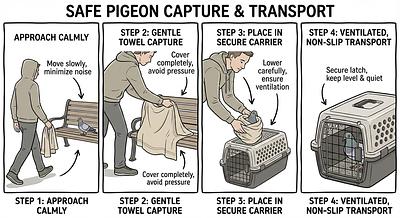
- Approach quietly: Move slowly from behind; pigeons are prey animals and easily frightened.
- Use a towel to cover: Gently throw a towel over the bird to calm it and prevent escape.
- Secure the wings: Hold the wings folded against the body to prevent flapping and injury.
- Place in a transport container: A cardboard box with ventilation and a soft lining (avoid terry cloth to prevent toe entanglement) works well.
Step 3: Immediate Care and Transport
- Keep the bird warm and calm: Use a low-heat heating pad under the transport box or place the box in a warm, quiet space.
- Minimize stress: Keep the box in a dark, quiet environment during transport.
- Transport quickly: Take the pigeon to a licensed avian veterinarian or wildlife rehabilitator ideally within an hour.
Step 4: Veterinary Examination and Treatment
- Professional assessment: An avian vet will perform physical exams, X-rays, and tests to diagnose injuries or illnesses.
- Medical interventions: May include antibiotics, wound care, cage rest, and nutritional support.
- Follow-up care: Essential for monitoring healing and preventing complications.
Step 5: Rehabilitation Environment Setup
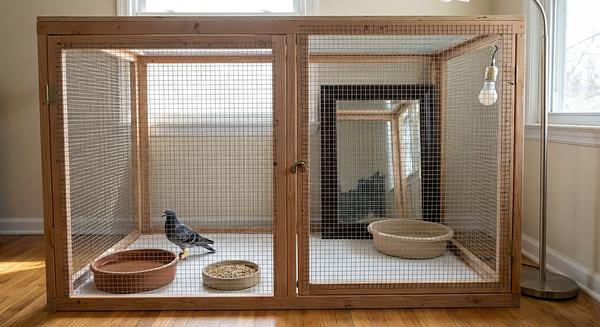
Indoor Care for Unreleasable or Domestic Pigeons
- Housing: Provide a cage at least 36 inches wide with flat-bottom ceramic food and water dishes.
- Enrichment: Include a large mirror (pigeons recognize themselves and enjoy mirrors), bathing dishes, and safe out-of-cage time.
- Lighting: Ensure access to natural sunlight or avian-safe full-spectrum lighting for vitamin D synthesis.
- Company: Pigeons are social; provide companionship either human or from other pigeons.
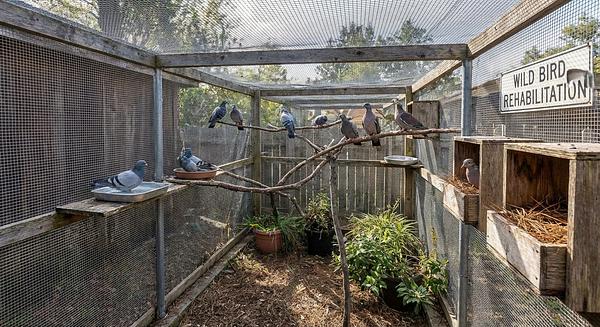
Outdoor Aviary for Releasable or Outdoor Pigeons
- Aviary construction: Predator and rodent-proof with hardware cloth (max 0.5-inch mesh), minimum size 4’x6’x6’.
- Amenities: Nest boxes, nesting materials (pine needles), mirrors, bathing pans, and fresh food/water daily.
- Social needs: Keep pigeons in pairs or groups to prevent loneliness.
Step 6: Nutrition and Hydration
- Diet: Provide a balanced diet of pigeon pellets, grains, seeds, and fresh vegetables.
- Water: Fresh, clean water daily in shallow, flat-bottom dishes.
- Bathing: Encourage regular bathing to maintain feather health.
Step 7: Monitoring and Behavioral Rehabilitation
- Observe behavior: Watch for signs of recovery such as feeding, preening, and mobility.
- Exercise: Provide supervised out-of-cage time or flight space if safe.
- Avoid free flight outdoors unless fully rehabilitated: Use harnesses or stroller carriers for outdoor exposure.
Step 8: Release or Long-Term Care Decisions
- Releasability assessment: Experts evaluate the bird’s ability to survive and thrive in the wild.
- Release protocols: If releasable, release near the original capture site with minimal stress.
- Adoption: Unreleasable pigeons can thrive as companion birds indoors or in aviaries.
Additional Tips for Successful Pigeon Rescue & Rehabilitation
- Educate yourself about pigeon biology and behavior to tailor care effectively.
- Avoid overcrowding; stress and disease spread quickly in confined spaces.
- Connect with pigeon rescue experts and avian veterinarians for guidance.
- Never attempt to rehabilitate without professional consultation for serious injuries or illnesses.
Pigeons are remarkably adaptable and resilient, often recovering well with appropriate care. Following these step-by-step rescue and rehabilitation protocols maximizes their chances of survival and quality of life, whether released back into the wild or cared for as companions. This guide is intended as a practical resource for rescuers dedicated to improving pigeon welfare through informed, compassionate action.

💬 Comments (0)